
Introduction to Marine PLC, HMI, and SCADA
In the maritime sector, operational efficiency and safety are paramount. To achieve these objectives, three critical components play a pivotal role: Marine PLC (Programmable Logic Controller), HMI (Human-Machine Interface), and SCADA (Supervisory Control and Data Acquisition). Each of these technologies contributes significantly to the automation and monitoring of marine operations.
A Marine PLC is an industrial digital computer specifically designed for controlling various machinery and processes in the marine environment. It operates by executing control instructions, making real-time decisions, and managing input and output operations. The robustness and reliability of Marine PLCs are crucial, as they ensure that systems such as propulsion, ballast, and environmental controls function seamlessly, thus enhancing overall safety and efficiency at sea.
In conjunction with Marine PLCs, the Human-Machine Interface (HMI) serves as the critical link between operators and machinery. The HMI provides graphical representations of operational data, allowing users to monitor and control machinery effortlessly. By displaying real-time status updates and alarms, HMIs enable operators to respond quickly to changing conditions, ensuring effective decision-making in maritime operations.
On a broader scale, SCADA systems integrate various subsystems, facilitating centralized monitoring and control over significant processes across marine environments. By gathering data from multiple Marine PLCs and other devices, SCADA allows maritime operators to analyze performance trends, optimize resource utilization, and maintain compliance with regulations. Understanding the interplay between Marine PLCs, HMIs, and SCADA is critical for enhancing operational efficiency and ensuring safety in marine applications.
In-depth Look at Marine PLC
Marine Programmable Logic Controllers (PLC) play a pivotal role in the automation of marine environments, providing precise control and monitoring of dynamic processes found in ships and offshore platforms. They are integral to the functioning of a wide variety of marine systems, including engine room monitoring, ballast water management, and navigation systems. Marine PLCs are specially designed to withstand the harsh conditions commonly encountered at sea, such as extreme temperatures, humidity, and vibration. This robust design ensures that they can operate reliably under challenging circumstances.
The primary function of a marine PLC is to automate control processes by converting incoming signals from various sensors into actionable outputs. These devices utilize a series of programmed instructions to execute control tasks efficiently. Features uniquely tailored for marine applications include fault tolerance and redundancy measures, which are essential for maintaining operational integrity in critical systems. For instance, a marine PLC can control the opening and closing of valves in liquid cargo systems, ensuring safe and efficient transfer operations.
Examples of applications where marine PLCs are utilized include engine control systems that automate functions such as fuel management and lubrication, and onboard safety systems that monitor critical parameters for preventing mishaps. Additionally, they are often integrated with marine Human-Machine Interfaces (HMI) to provide operators with real-time data and system status through intuitive dashboards. The combination of marine PLCs with SCADA (Supervisory Control and Data Acquisition) systems further enhances data visibility and operational efficiency.
Emphasizing benefits, marine PLCs significantly improve reliability and operational efficiency by minimizing human intervention and reducing response times in critical situations. As automation continues to evolve in the marine industry, the importance of marine PLCs in enhancing safety, efficiency, and compliance with regulations cannot be overstated.
Exploring HMI Systems
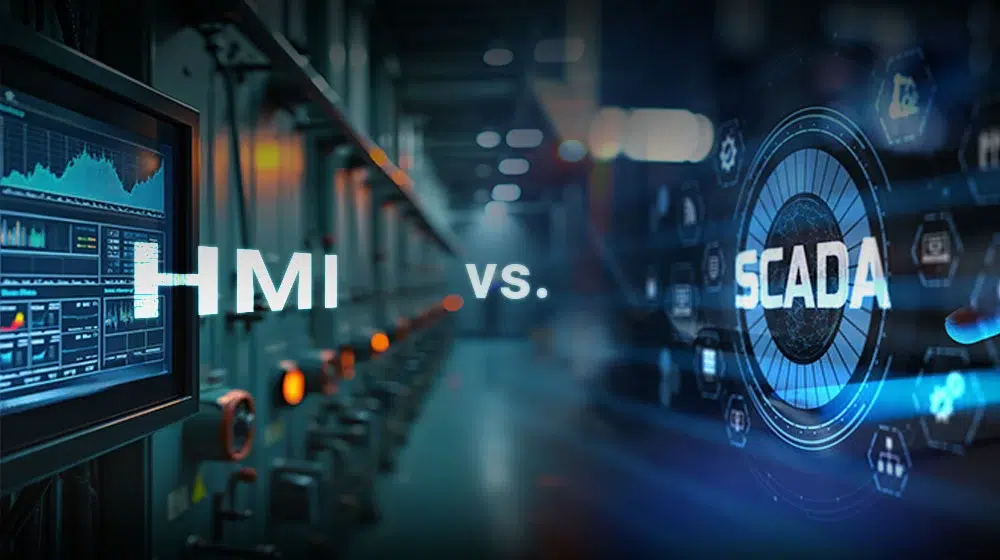
Human-Machine Interfaces (HMI) play a pivotal role in the marine industry by serving as the critical point of interaction between operators and complex marine systems. These interfaces facilitate the transmission of data from marine PLCs (Programmable Logic Controllers) and SCADA (Supervisory Control and Data Acquisition) systems, providing users with real-time information that is essential for effective decision-making. HMI systems are designed to display crucial operational data in a user-friendly manner, enabling seamless comprehension and management of marine operations.
One of the primary functions of HMI systems in marine applications is to present data visually, such as showing tank levels, pressure readings, and alarms. By translating intricate data into easily understandable graphics and text, HMI systems improve overall situational awareness for operators. This is particularly important in marine environments, where timely information can be the difference between operational success and failure. Users can also input commands directly through the HMI, allowing for responsive adjustments to processes and systems as required.
Various types of HMI systems are utilized within the marine industry, each tailored for specific applications. For instance, touch-screen HMIs are common on vessels, providing crew members with an intuitive method to monitor and manipulate machinery controls. On the other hand, more robust installations may implement desktop-based HMIs, which are typically employed for shore-based operations monitoring ships’ systems remotely. Moreover, advancements in technology have led to the integration of cloud-based HMI solutions, facilitating enhanced data accessibility and analytical capabilities across marine fleets.
In conclusion, HMI systems greatly enhance the efficiency and safety of operations within marine environments. By allowing users to interact dynamically with marine PLCs and SCADA systems, they are instrumental in facilitating operational decision-making and providing critical insights into system performance.
SCADA Systems in Marine Applications
Supervisory Control and Data Acquisition (SCADA) systems play a critical role in marine applications by offering a centralized platform for monitoring, controlling, and analyzing diverse operations in real-time. In the marine sector, SCADA systems are specifically designed to interface seamlessly with Marine PLCs and HMIs, contributing to enhanced operational efficiency and safety standards.
One of the primary advantages of using SCADA systems in marine applications is their ability to collect and analyze data from multiple sources. For instance, these systems can gather information from sensors, valves, and other devices installed on vessels or at marine facilities. This comprehensive data collection enables operators to maintain a complete overview of the system’s performance, thus facilitating immediate decision-making and responsiveness to any anomalies that might arise.
The centralized control aspect of SCADA systems significantly simplifies the management of marine environments, where physical space and resources can often be limited. Through a user-friendly HMI interface, operators can easily monitor various parameters and make necessary adjustments, leading to improved operational reliability. Moreover, the data storage capabilities of SCADA systems allow for longitudinal analysis, essential for long-term planning and maintenance strategies. Historical data can inform future decisions on upgrades, repairs, and overall system enhancements.
Furthermore, SCADA systems enhance communication between different marine operations. By integrating PLCs, these systems facilitate the automation of processes, enabling remote monitoring and control. This is particularly beneficial in contexts where conditions are hazardous or difficult to access. Overall, the deployment of SCADA in marine applications signifies a significant advancement, which not only streamlines operations but also ensures compliance with various environmental and safety regulations.