
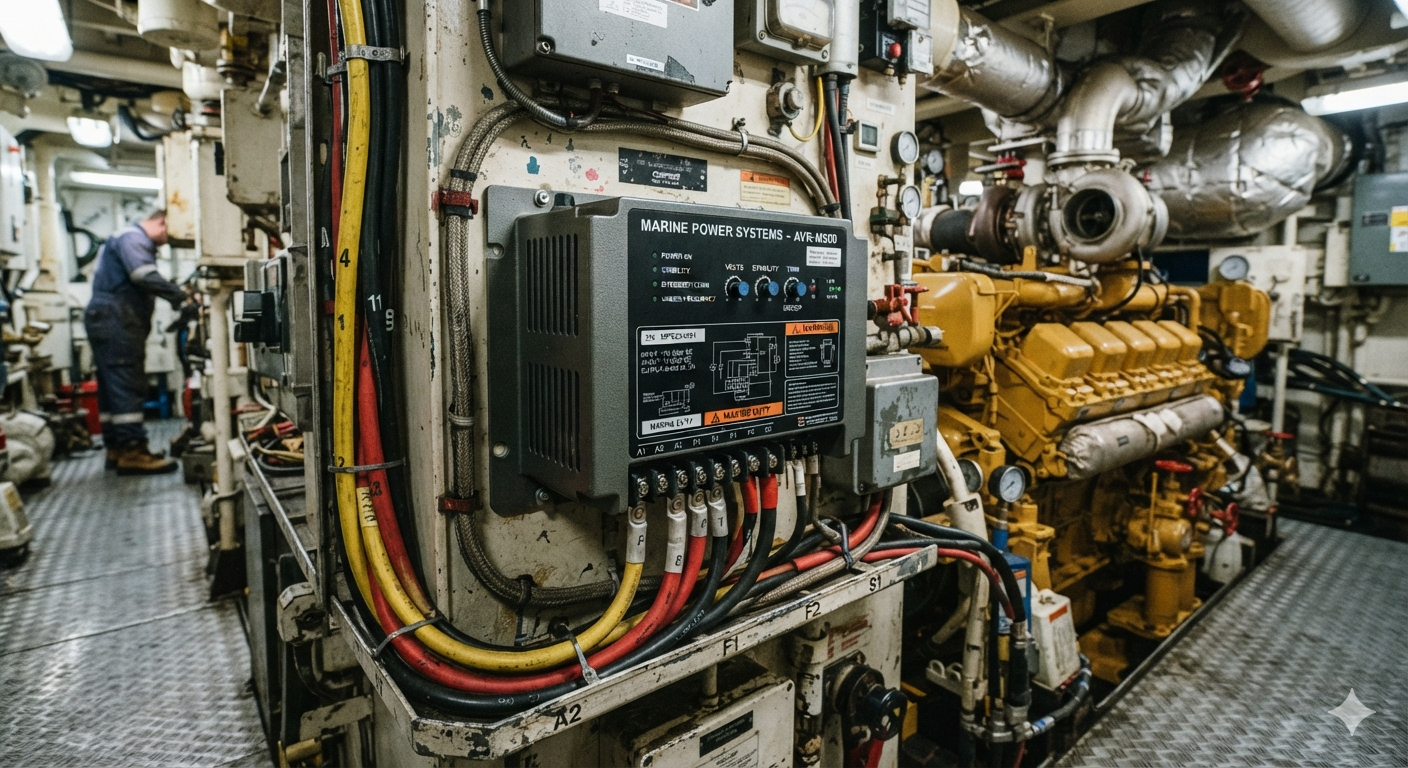
Introduction to Automatic Voltage Regulators
Automatic Voltage Regulators (AVRs) play a crucial role in electrical systems by ensuring that voltage levels remain stable and consistent. These devices are designed to automatically adjust the output voltage supplied to electrical equipment, thereby safeguarding it from voltage fluctuations that can cause damage or dysfunction. The primary function of a marine AVR is to detect changes in the input voltage and make immediate adjustments to maintain the desired output levels.
The importance of voltage regulation can be observed in various applications, particularly in marine environments. In such settings, equipment often relies on a stable power source for optimal performance, making the role of an automatic voltage regulator indispensable. Fluctuations in voltage can lead to inefficient operation, unexpected shutdowns, and long-term damage to sensitive components, highlighting the need for reliable voltage management.
AVRs operate using a feedback mechanism that compares the output voltage to a predefined reference. If the output deviates from this reference due to various factors—such as changes in load or input voltage—the AVR functions to adjust the excitation of the generator. By controlling the excitation, the AVR ensures that the generator provides a consistent voltage output, which is particularly vital in maintaining the power quality in marine applications.
In summary, automatic voltage regulators are essential devices that help maintain the stability and reliability of electrical systems. By preventing voltage variations that could lead to malfunction, marine AVRs enable the smooth operation of critical equipment on board and ensure safe and efficient power distribution. Understanding the role and functionality of these regulators is fundamental for anyone involved in maritime electrical systems.
Types of Automatic Voltage Regulators
Automatic Voltage Regulators (AVRs) are essential components in various electrical systems, ensuring that voltage levels remain stable under varying load conditions. There are several types of marine AVRs available in the market, each with distinct working principles and applications, ensuring effective voltage regulation across different scenarios.
One common type is the servo-controlled automatic voltage regulator. These regulators use a motorized mechanism to adjust the voltage output actively. When the output voltage deviates from the desired set point, the servo motor reacts to this change, repositioning voltage to maintain stability. The advantages of servo-controlled AVRs include their ability to handle heavy loads and provide reliable voltage stabilization, making them suitable for marine applications where fluctuating loads are prevalent.
Another type is the digital automatic voltage regulator. These regulators incorporate advanced microprocessor technology to monitor and control voltage levels precisely. By utilizing real-time data, digital AVRs can respond quicker than traditional models, leading to improved performance and efficiency. The key benefit of digital AVRs includes their capacity for enhanced programmability and integration with other digital systems, providing a competitive edge for modern marine electrical setups.
The linear automatic voltage regulator is also noteworthy. This type employs a linear control mechanism to maintain voltage steady. While generally less efficient than other types, linear regulators are renowned for their simplicity and reliability. They are particularly effective for low-power applications where efficiency is not a critical concern. For marine applications, they are typically used in small vessels or auxiliary systems.
Ultimately, the selection of a marine automatic voltage regulator depends on the specific electrical system’s needs and the nature of loads it will encounter. Each type offers distinct advantages, making them suitable for various applications across the marine sector.
Installation and Maintenance of AVRs
Installing a marine automatic voltage regulator (AVR) is a critical task that ensures the proper functioning of electrical systems in marine environments. When beginning the installation, it is vital to gather the necessary tools, including screwdrivers, voltage testers, and appropriate wiring materials. Familiarizing yourself with the specific model of the marine AVR will also provide insights into its required voltage and current ratings.
Before installation, safety should be paramount. Always disconnect the power source and verify that the system is de-energized. Once safety is ensured, follow the manufacturer’s installation instructions closely. Typically, the AVR is wired between the generator and the battery charging system to manage voltage levels effectively. Pay close attention to the connections, ensuring they are secure and free from corrosion that could impair performance.
Regular maintenance of your marine AVR is crucial for ensuring longevity and optimal performance. Start with periodic inspections; check for loose connections or signs of wear and tear on the components. Cleaning the unit to prevent dust buildup is essential. Additionally, testing the unit with a multimeter can provide insights into its functionality and help detect any inconsistencies in voltage regulation.
Troubleshooting common issues, such as fluctuations in voltage output or total system failure, can often be accomplished with basic tools. If persistent problems arise, it may be time to consult a professional. A qualified technician can provide a thorough analysis of the marine AVR, ensuring that your investment in a reliable voltage regulation system is protected against potential pitfalls. Following these guidelines will help maximize the efficiency of your marine automatic voltage regulator while promoting safety on board.
Conclusion and Future Trends in AVR Technology
Throughout this comprehensive guide, we have explored the essential role that marine Automatic Voltage Regulators (AVRs) play in ensuring the stability and reliability of electrical systems. In various applications, particularly in marine environments, these devices are critical in maintaining voltage levels, thus preventing damage to sensitive equipment and ensuring optimal performance. The functionality of a marine AVR is essential for achieving operational efficiency, particularly in vessels that rely on a consistent power supply.
As we look towards the future of AVR technology, several trends are emerging that indicate significant advancements in this field. One of the most promising developments is the rise of smart AVRs, which incorporate sophisticated algorithms and real-time monitoring capabilities. This technology enables better responsiveness to fluctuations in power supply and demand, enhancing overall system efficiency.
Furthermore, the integration of marine AVRs with renewable energy sources is becoming increasingly prevalent. As the marine industry shifts towards sustainability, there is a growing need for AVRs that can dynamically manage the variable outputs from solar and wind energy systems. This not only allows for a reduction in reliance on traditional power sources but also promotes a greener approach to marine operations.
In conclusion, the future of marine automatic voltage regulators looks promising, with innovations poised to enhance their functionality and efficiency. As technological advancements continue to unfold, we can expect AVRs to evolve, playing an even more integral role in modern electrical systems and contributing to the overall advancement of maritime technology.