
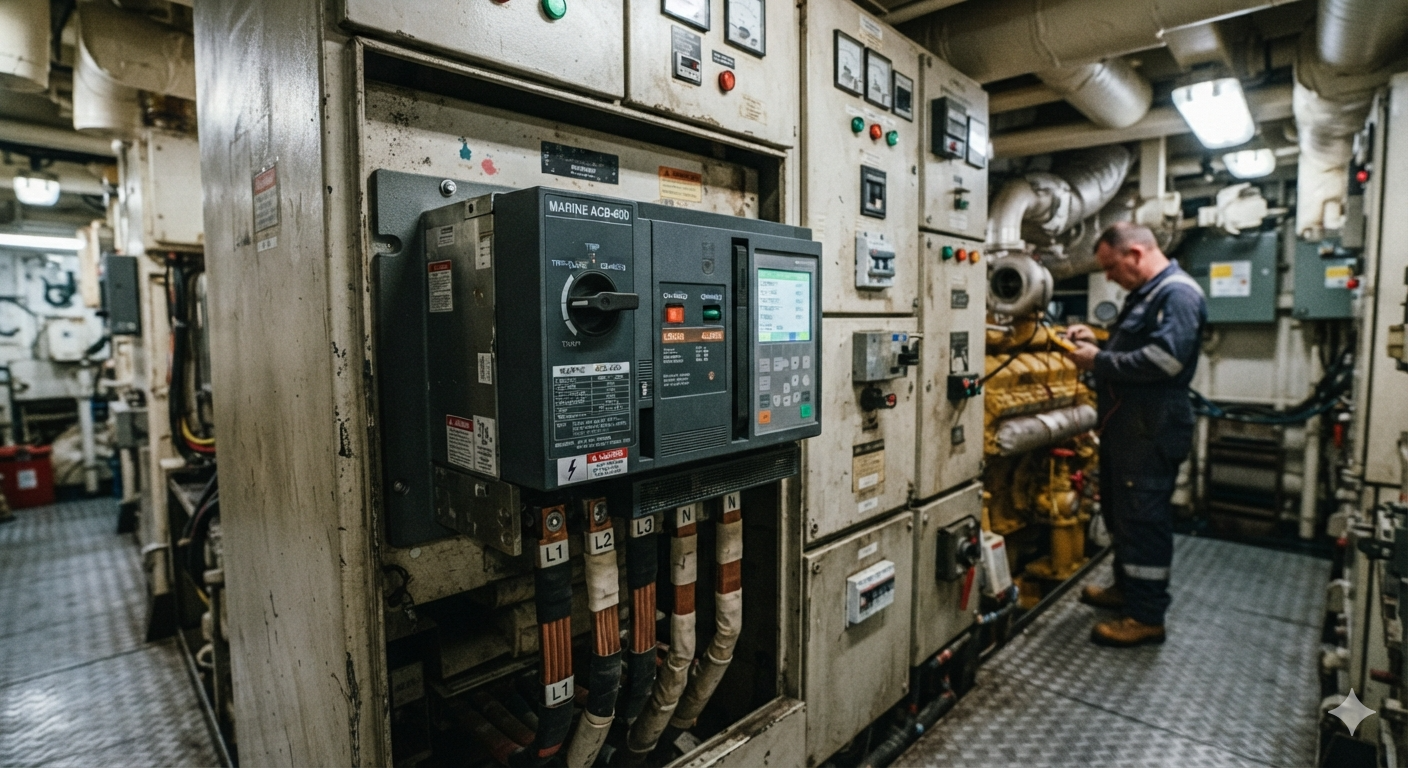
Introduction to Air Circuit Breakers
An air circuit breaker (ACB) is a critical component in electrical systems, designed to protect circuits from damage due to overcurrents and short circuits. These devices operate by interrupting the flow of electricity when an abnormal condition is detected, thereby preventing potential hazards such as electrical fires and equipment failure. Air circuit breakers serve a crucial role in ensuring the safe operation of electrical installations in both commercial and industrial settings.
ACBs are distinguished from other types of circuit breakers, such as miniature circuit breakers (MCBs) and residual current devices (RCDs), primarily by their operating mechanism and capacity. While MCBs are typically used for low-voltage applications, marine air circuit breakers are engineered to handle higher current loads and are suitable for use in marine environments. The design of an air circuit breaker allows it to operate reliably under the dynamic conditions often found on ships or offshore platforms.
The operation of marine ACBs relies on the principle of air insulation. When an overcurrent occurs, the device opens a set of contacts to interrupt the electrical flow. This action is often assisted by the creation of an electric arc, which is then extinguished by the surrounding air. This feature not only enhances the reliability of the breaker but also ensures minimal maintenance, making air circuit breakers an effective choice for both land and sea applications.
In many cases, the importance of marine ACBs cannot be overstated, as they play a vital role in the safety and efficiency of modern electrical systems. Their ability to quickly respond to fault conditions makes them indispensable for safeguarding electrical distribution networks and ensuring uninterrupted service in critical environments. Understanding the fundamentals of air circuit breakers sets the foundation for appreciating their function within complex electrical systems.
Types of Air Circuit Breakers
Air Circuit Breakers (ACBs) are crucial components in managing electrical systems, offering protection against overloads and short circuits. Among the various types, the primary categories are plain break (also known as mechanical type), magnetic blowout, and air chute types. Each type serves distinct purposes and is suited for specific applications.
The plain break air circuit breaker initiates operation when an electrical fault occurs, utilizing mechanical mechanisms to interrupt current flow. This type is favored for its simplicity and reliability, making it ubiquitous in industrial environments. Despite its advantages, it may have slower response times compared to other models, which can be a critical factor in high-risk settings.
On the other hand, the magnetic blowout type incorporates magnetic fields to improve current interruption. This design enhances the ability to quench the arc that forms during operation, thus providing a quicker response to fault conditions and avoiding potential damage to connected equipment. The magnetic blowout ACB is particularly beneficial in applications where high currents are expected, but it requires precise design and can be more costly than simpler models.
The air chute type is distinguished by its unique mechanism, where air is channeled through a defined path to extinguish arcs effectively. This design increases the breaker’s efficiency in high-voltage situations and minimizes the risk of equipment damage. Its main advantage lies in its effectiveness for sustained operation, particularly in settings dealing with fluctuating loads. However, it may not be as compact as the other types, which could be a disadvantage in space-constrained environments.
In selecting the appropriate marine air circuit breaker for a specific application, considerations such as operational environment, load characteristics, and response requirements are paramount. Each type of marine ACB has its own set of benefits and drawbacks that must be evaluated to ensure optimal performance.
Components and Working Mechanism of ACBs
The air circuit breaker (ACB), particularly the marine air circuit breaker, is a crucial electrical protection device used in various applications, including marine environments. ACBs comprise several integral components: the contact mechanism, operating mechanism, and trip unit. Understanding these elements is essential for comprehending the overall functionality of ACBs in fault conditions.
The contact mechanism is central to the operation of an air circuit breaker. It includes fixed and moving contacts that close and open to either conduct or interrupt electrical current. During normal operation, the contacts remain closed, allowing current to pass. However, in case of an overload or short circuit, the contacts will open rapidly to isolate the fault from the system and protect against potential damage. The marine ACB is designed to withstand harsh conditions, ensuring that the contact mechanism operates reliably in challenging maritime environments.
Next, the operating mechanism plays a pivotal role in actuating the contacts. This mechanism utilizes stored energy, often provided by springs, which enables the rapid opening of the contacts during a fault. The energy is released through various forms of control, either manually or automatically triggered by the trip unit. Timeliness in the operation is vital, specifically in maritime applications where electrical failures can lead to significant risks.
The trip unit is a fundamental component that detects electrical anomalies, such as overloads and short circuits. It can be electromechanical or electronic, providing the necessary sensing and control functions to operate the ACB correctly. In marine applications, an effective trip unit is imperative for enhancing safety and reliability in fluctuating electrical systems.
Overall, the integration of these components allows the marine air circuit breaker to provide effective protection for electrical circuits against faults, ensuring both safety and operational reliability in demanding marine environments.
Applications and Benefits of Air Circuit Breakers
Air circuit breakers (ACBs) are essential components in a range of electrical systems across various industries. Their versatility allows them to be effectively employed in industrial, commercial, and residential setups. In industrial environments, marine air circuit breakers are particularly valuable due to their robust performance and reliability in demanding conditions, often subjected to fluctuations in load and environmental factors. They play a pivotal role in protecting electrical circuits and machinery, contributing to minimized downtime and enhanced operational efficiency.
In commercial applications, the use of marine ACBs ensures a higher level of electrical safety and compliance with regulatory standards. These breakers are capable of handling large electrical loads, making them suitable for office buildings, shopping centers, and other enterprises where high power demand is common. Their advanced technology features allow for improved monitoring and control of electrical distribution, fostering enhanced management of energy resources.
In residential settings, air circuit breakers provide significant safety measures and prevent electrical failures. Homeowners can benefit from the presence of ACBs, as these devices protect against electrical overloads and short circuits, preventing potential hazards such as electrical fires. Moreover, they are known for their ease of maintenance and installation, which can significantly reduce long-term operational costs.
The primary benefits of using marine air circuit breakers extend beyond just protection; they also include improved reliability and operational efficiency. ACBs are designed to ensure continuity of electrical service and facilitate quick fault isolation, which is vital in both critical and non-critical applications. Once installed, these devices offer longevity and require minimal maintenance, further solidifying their role as an indispensable element in modern electrical infrastructures.