
Introduction to Marine Gyrocompasses
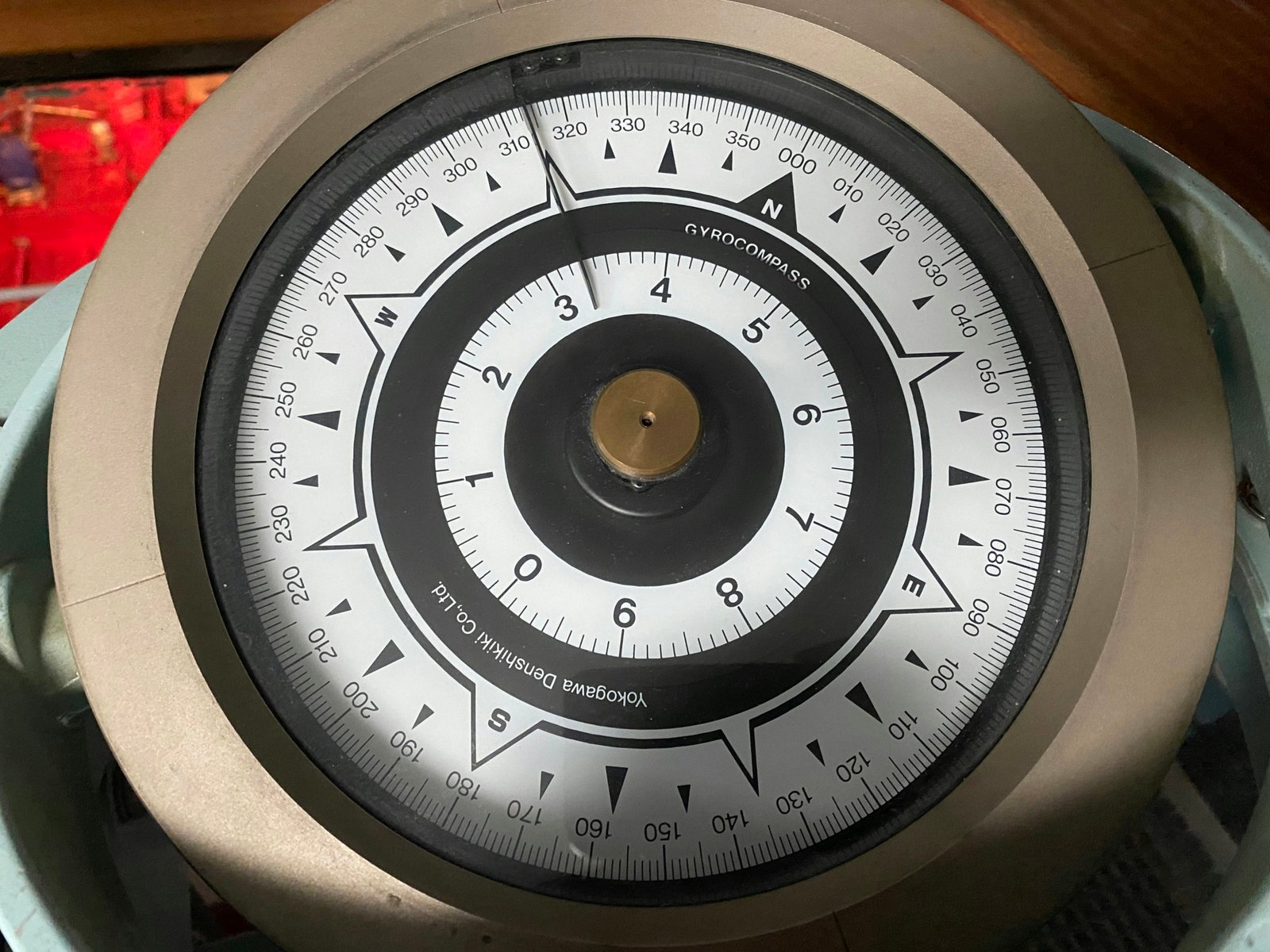
A marine gyrocompass is an essential navigational instrument used in ships and other maritime vessels. Unlike traditional magnetic compasses, which rely on the Earth’s magnetic field, a gyrocompass utilizes the principles of gyroscopic motion and inertial navigation to maintain a true north reference. This makes it particularly advantageous in environments where magnetic interference may render magnetic compasses ineffective or inaccurate, such as near ferrous structures or during navigation in polar regions.
The primary purpose of a marine gyrocompass is to provide accurate heading information, which is crucial for safe and effective navigation. By continuously orienting itself relative to the geographic north pole, the gyrocompass offers a consistent and reliable reference point that mariners depend on. This ability to maintain true north is a significant advantage that enhances navigational accuracy and enhances maritime safety.
Furthermore, the significance of marine gyrocompasses becomes evident when considering their incorporation into larger navigational systems. Many modern vessels integrate gyrocompasses with electronic chart systems, autopilot, and radar systems to enhance overall navigational efficiency. The synergy between these technologies provides real-time data and contributes to smarter and more efficient route planning.
When comparing gyrocompasses to magnetic compasses, several key differences arise. One of the most notable distinctions is the lack of susceptibility to magnetic anomalies in the environment, making the gyrocompass an overall more reliable instrument in diverse navigational contexts. Additionally, gyrocompasses often require a longer time to settle and achieve accuracy when first powered, yet once calibrated, they offer superior stability and precision compared to their magnetic counterparts. This characteristic ensures that marine gyrocompasses are a preferred choice for both commercial and recreational marine navigation.
How Marine Gyrocompasses Work
Marine gyrocompasses operate based on the principles of gyroscopic motion, which enables them to find true north with remarkable accuracy. Unlike magnetic compasses, which rely on the Earth’s magnetic field, gyrocompasses offer a stable reference by utilizing the properties of a spinning rotor. As the rotor spins, it maintains its orientation due to angular momentum, which is pivotal to the functioning of a gyrocompass.
One significant aspect of gyrocompass operation is precession. When a force acts perpendicular to the axis of the rotor’s spin, it causes the rotor to precess, or change direction, rather than simply tilting. This precessional motion is what allows the gyrocompass to align itself with the Earth’s rotation. As a vessel moves, the gyrocompass compensates for changes in orientation, ensuring that it continuously points to true north regardless of the ship’s heading.
The performance of a marine gyrocompass is influenced by several factors, including the rotational speed of the Earth and the dynamic movements of the ship. The Earth’s rotation imparts a subtle effect known as the Coriolis force, which affects the gyrocompass’s accuracy. Furthermore, external forces such as ship acceleration, rolling, and pitching can introduce errors in the gyrocompass reading. To mitigate these influences, modern gyrocompasses are equipped with sophisticated sensors and algorithms designed to adjust for variable conditions.
In essence, the operation of a marine gyrocompass is a complex integration of gyroscopic principles and compensatory mechanisms, allowing it to provide reliable navigational data. Its ability to maintain a true reference point amidst the dynamic environment of the sea marks it as an essential tool for maritime navigation.
Applications and Advantages of Gyrocompasses in Navigation
Marine gyrocompasses serve a critical role in the navigation systems of various maritime vessels, providing vital heading information that enhances decision-making in navigation. These sophisticated devices have found applications in commercial shipping, military submarines, and recreational boating. Their wide-ranging use reflects their pivotal importance in the maritime industry, where precise navigation is paramount.
In commercial vessels, marine gyrocompasses are indispensable for ensuring safe navigation across vast oceans. With their ability to maintain a stable reference to true north, gyrocompasses offer superior accuracy compared to traditional magnetic compasses. This accuracy is crucial in preventing navigational errors that could lead to collisions or grounding. Furthermore, in an environment where magnetic interference from various onboard equipment can distort magnetic compass readings, the gyrocompass maintains its reliability and operational integrity.
Submarines also heavily rely on gyrocompasses for navigation underwater, where GPS signals are unavailable. The gyrocompass provides essential heading data that enables submariners to maneuver effectively while being submerged. Its speed in responding to changes in pitch and roll allows for quick adjustments, contributing to the overall safety and efficiency of submarine operations.
On the recreational side, many pleasure boats utilize marine gyrocompasses to enhance navigation capabilities, particularly as boating technology continues to evolve. Boaters appreciate the reliability of gyrocompasses for ensuring they remain on course, especially in adverse weather conditions where visibility may be reduced.
In conclusion, the applications of marine gyrocompasses span various sectors of the maritime industry, and their advantages over traditional magnetic compasses are profound. Enhanced accuracy, reliability, and resilience to magnetic interference make gyrocompasses an essential tool in modern navigation, ensuring safety and efficiency across diverse maritime activities.
Maintenance and Troubleshooting of Marine Gyrocompasses
Ensuring the optimal functionality of marine gyrocompasses is crucial for accurate navigation at sea. Regular maintenance practices are essential for preventing common issues that can arise with these sophisticated instruments. Routine checks should begin with inspecting the physical condition of the gyrocompass unit, ensuring that it is free from mechanical damage and corrosion. It is also important to verify that all external connections, such as electrical and communication lines, are intact and functioning properly.
Calibration is another pivotal aspect of maintaining a gyrocompass. Regular calibration ensures the gyrocompass aligns correctly with the Earth’s magnetic field, allowing for precise heading indications. It is advisable to follow the manufacturer’s instructions regarding the calibration frequency, usually conducted at least once a year or following significant changes in the ship’s environment. The calibration process typically involves using calibration software or manually adjusting the settings based on standardized reference points, thus enhancing navigation accuracy.
When addressing troubleshooting, it is essential to identify symptoms of malfunction early. Common issues can include deviation errors, abnormal drift rates, or erratic behavior of the compass readings. Such problems can often be resolved through recalibration or by checking for firmware updates, which manufacturers may release periodically to enhance the performance of the marine gyrocompass. Additionally, if persistent issues occur, consulting the technical manual or seeking professional assistance may be necessary.
In summary, routine maintenance checks, regular calibration, and prompt troubleshooting are vital for maintaining marine gyrocompasses. Implementing these practices will ensure accurate navigation and prolong the lifespan of these essential devices, ultimately enhancing maritime safety and efficiency.